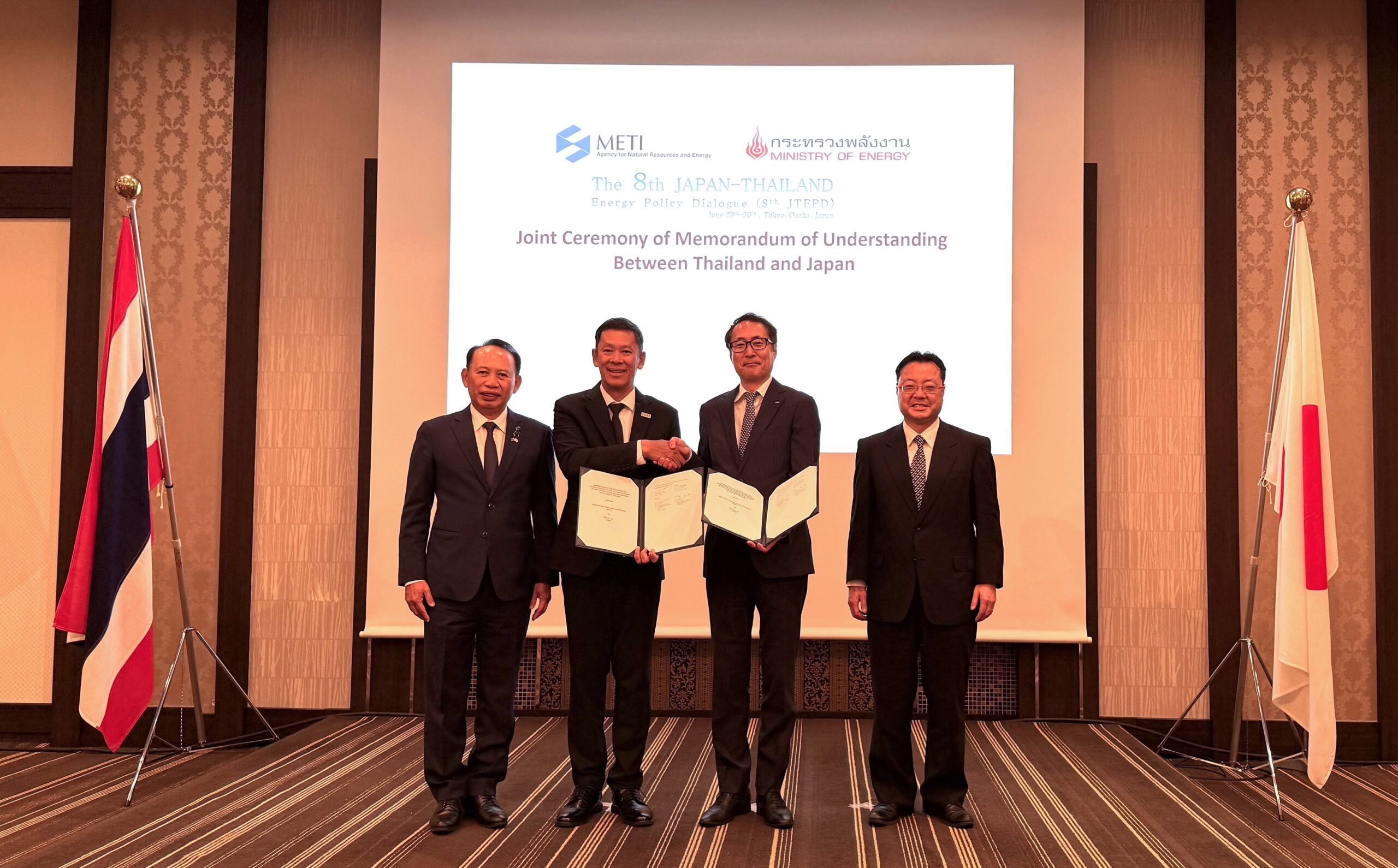
Japan’s largest power generation company JERA Co., and the Electricity Generating Authority of Thailand will explore opportunities for the development of hydrogen and ammonia value chains in the Southeast Asian country.
As per the Memorandum of Understanding, both companies will identify and evaluate market opportunities and business potential for hydrogen and ammonia, including assessments of technical, economic and commercial feasibility; evaluate the use of hydrogen and ammonia for power generation, including opportunities for fuel substitution; and assess policy, regulatory and environmental considerations related to their adoption.
Izumi Kai, Managing Executive Officer, Head of Platform Business Division of JERA and CEO of JERA Asia, said partnerships will be essential to identifying scalable and practical pathways to a lower-carbon future.
“We are pleased to work with EGAT to assess the potential of hydrogen and ammonia as part of Thailand’s evolving energy mix. Building on our longstanding presence in the country, JERA remains committed to supporting solutions that balance sustainability, energy security, and economic growth.”
Thailand has established targets to achieve net-zero greenhouse gas emissions by 2050. As the country works towards these goals, hydrogen and ammonia are among the options being explored to support decarbonization and diversify the future energy mix.
Realizing the potential of these low-carbon fuels will require the development of an integrated value chain spanning production, transportation, storage, distribution and end-use applications, underscoring the importance of collaboration across industry stakeholders.
As Thailand’s largest power generator and single buyer of bulk electricity, EGAT plays a central role in the country’s electricity system and energy security. JERA is pioneering Japan’s first integrated ammonia value chain by fiscal year 2029.
The MOU brings together two leading companies with complementary strengths to support Thailand’s energy transition.
JERA aims to achieve net-zero CO2 emissions by 2050 through the expansion of renewable energy and the advancement of lower-carbon thermal power generation. Furthermore, JERA will continue to collaborate with leading partners in Japan and around the world to further develop and expand lower-carbon hydrogen and ammonia value chains, contributing to its mission to provide cutting-edge solutions to the world’s energy issues.
Also Read: Chevon to Power Microsoft West Texas Data Centre