
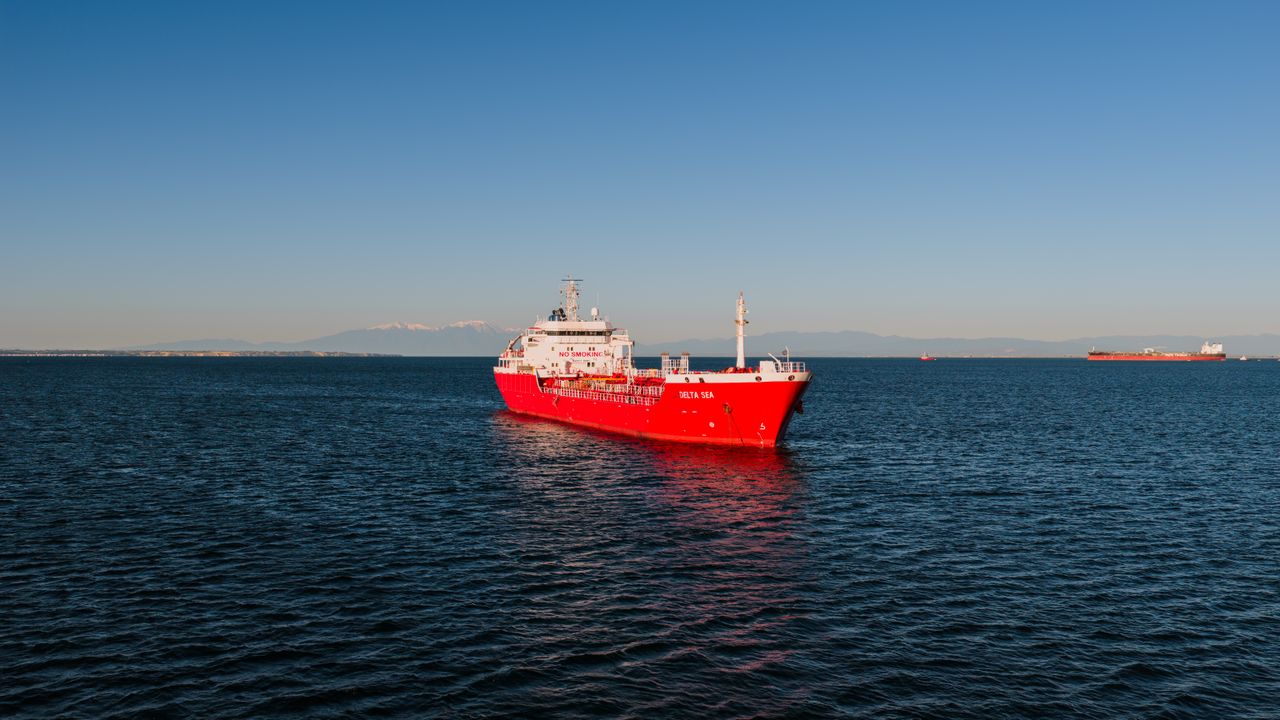
For centuries, shipping has been the engine of global trade. Today, it remains indispensable, moving everything from crude oil and iron ore to consumer electronics and food products across oceans and continents. Yet as the industry continues to connect the global economy, it faces a challenge unlike any before: reducing its environmental impact while keeping world trade moving efficiently.
The pressure is mounting from every direction. Regulators are tightening emissions standards, cargo owners are demanding greener supply chains, and investors are increasingly scrutinizing sustainability performance. At the same time, the maritime sector has committed to ambitious decarbonization goals that will require a fundamental shift away from traditional fossil fuels.
This transition has sparked a race to identify the fuels that could power the next generation of vessels. While no single solution has emerged as the clear winner, several alternative marine fuels are gaining momentum and attracting billions of dollars in investment.
From LNG and methanol to ammonia and hydrogen, the future fuel landscape is becoming increasingly diverse. Each option brings its own advantages, challenges, and opportunities. Here’s a closer look at the five alternative marine fuels that are shaping the future of sustainable shipping.
1. LNG: The Industry’s First Major Step Away from Heavy Fuel Oil
When the shipping industry first began exploring lower-emission alternatives, Liquefied Natural Gas (LNG) quickly emerged as the leading contender.
Unlike heavy fuel oil, LNG burns significantly cleaner, offering immediate reductions in harmful pollutants. This made it an attractive option for shipowners looking to comply with stricter environmental regulations without completely overhauling their operations.
One of LNG’s biggest advantages is that it is no longer an experimental solution. Hundreds of LNG-powered vessels are already operating worldwide, and bunkering infrastructure has expanded steadily across major ports.
From an emissions perspective, LNG delivers measurable improvements. Sulfur oxide emissions are virtually eliminated, particulate matter is dramatically reduced, and carbon dioxide emissions can be lowered by around 20 to 25 percent compared to conventional marine fuels.
These benefits have made LNG particularly attractive for container ships, tankers, ferries, and cruise vessels operating on established trade routes.
However, LNG is increasingly viewed as a transitional fuel rather than a permanent solution. While it reduces emissions, it remains a fossil-based fuel. The issue of methane slip—where unburned methane escapes into the atmosphere—has also raised concerns among environmental groups and regulators.
Still, LNG has played an important role in proving that large-scale fuel transitions are possible in the maritime sector. For many operators, it represents a practical bridge between traditional fuels and the zero-carbon solutions of the future.
2. Green Methanol: The Fuel Gaining Momentum Fast
Few alternative fuels have generated as much excitement in recent years as methanol.
Once considered a niche option, methanol has rapidly moved into the mainstream as major shipping companies place orders for methanol-ready vessels and fuel suppliers ramp up production capacity.
Part of methanol’s appeal lies in its simplicity. Unlike LNG, which requires cryogenic storage, methanol remains liquid at ambient temperatures. This makes storage, handling, and bunkering considerably easier for ship operators and port facilities.
The environmental benefits become even more compelling when the fuel is produced from renewable sources. Green methanol, made using renewable hydrogen and captured carbon dioxide or biomass feedstocks, can significantly reduce lifecycle greenhouse gas emissions.
For shipowners, another advantage is the relative ease of integrating methanol into vessel operations. Existing fuel infrastructure can often be adapted rather than completely rebuilt, reducing capital investment requirements.
The surge in industry interest is not difficult to understand. Shipping companies are looking for fuels that can deliver meaningful emissions reductions without introducing excessive operational complexity. Methanol checks many of those boxes.
That said, challenges remain. Global production volumes of green methanol are still relatively limited, and demand is expected to grow much faster than supply in the coming years. Pricing also remains higher than conventional fuels.
Even so, many analysts believe methanol has one of the clearest pathways to large-scale adoption. As production facilities come online and renewable energy capacity expands, methanol could become one of the defining fuels of the maritime energy transition.
3. Ammonia: A Strong Contender for Deep-Sea Shipping
If conversations at maritime conferences are any indication, ammonia has become one of the industry’s most talked-about future fuels.
The reason is simple: ammonia contains no carbon.
Because carbon dioxide emissions originate from carbon-containing fuels, ammonia offers the possibility of operating vessels without producing direct CO₂ emissions during combustion. For an industry under increasing pressure to decarbonize, that is an attractive proposition.
Green ammonia is produced using renewable electricity, hydrogen, and atmospheric nitrogen. When generated through renewable processes, it has the potential to become a genuinely low-carbon marine fuel.
Many experts see particular promise in ammonia for long-haul and deep-sea shipping. Compared with hydrogen, it offers higher energy density and can be transported more easily over long distances.
However, ammonia’s advantages come with significant challenges.
Safety is perhaps the most important. Ammonia is toxic, requiring specialized handling procedures, crew training, and robust safety systems onboard vessels and at bunkering facilities.
Engine technology is another area still under development. While major engine manufacturers are making rapid progress, widespread commercial deployment remains in its early stages.
Despite these hurdles, momentum continues to build. Shipowners, classification societies, engine manufacturers, and fuel producers are investing heavily in ammonia research and pilot projects.
If technical and infrastructure challenges can be overcome, ammonia may ultimately become one of the most important fuels in the industry’s journey toward net-zero emissions.
4. Hydrogen: The Clean Fuel with Big Potential
Hydrogen has long been viewed as one of the cleanest energy carriers available.
When used in fuel cells, it produces electricity while emitting nothing more than water vapor. From a sustainability perspective, that makes hydrogen highly attractive.
The maritime industry has been exploring hydrogen-powered vessels for several years, particularly in segments such as ferries, coastal shipping, and short-sea operations.
Hydrogen can be used either in fuel cells or modified internal combustion engines, giving shipowners flexibility in how they approach implementation.
The environmental case for green hydrogen is strong. When produced using renewable electricity, hydrogen can deliver near-zero lifecycle emissions and eliminate many of the pollutants associated with conventional marine fuels.
Yet despite its promise, hydrogen faces practical challenges that are difficult to ignore. Storage remains one of the biggest obstacles. Hydrogen contains a tremendous amount of energy by weight but relatively little by volume. To store sufficient quantities onboard a vessel, operators must either compress it at high pressures or cool it to extremely low temperatures.
Both approaches increase complexity and cost.
Infrastructure presents another challenge. While investment is growing, global hydrogen bunkering networks remain limited compared to more established fuels.
For now, hydrogen appears most viable for shorter routes where storage constraints are less severe. Over time, advances in fuel cell technology, renewable energy production, and infrastructure development could significantly expand its role within the maritime sector.
5. Biofuels: The Immediate Decarbonization Opportunity
While many alternative fuels are still developing, biofuels offer something the shipping industry values highly: immediate practicality.
Unlike ammonia or hydrogen, many biofuels can be used in existing engines with minimal or no modifications. This allows operators to reduce emissions without waiting for entirely new vessel designs or infrastructure networks.
Biofuels can be produced from a variety of feedstocks, including agricultural waste, used cooking oil, forestry residues, and other organic materials.
Depending on the production pathway, these fuels can significantly reduce lifecycle greenhouse gas emissions while also lowering sulfur and particulate matter emissions.
For shipowners facing near-term decarbonization targets, biofuels provide a relatively straightforward solution.
Several major shipping companies have already conducted successful biofuel trials on commercial voyages, demonstrating that alternative fuels can be integrated into existing operations without major disruptions.
However, biofuels are not without limitations.
The availability of sustainable feedstocks remains a concern, particularly as demand grows across multiple sectors including aviation, trucking, and power generation. There are also ongoing debates about land use, food security, and the long-term sustainability of certain feedstock sources.
Even so, biofuels are likely to play an important role during the industry’s transition period, helping reduce emissions while zero-carbon fuels continue to mature.
The Reality: There Probably Won’t Be One Winning Fuel
One of the most interesting aspects of the maritime energy transition is that it may not produce a single dominant fuel.
Shipping is incredibly diverse. The fuel requirements of a coastal ferry are vastly different from those of a large container vessel crossing the Pacific Ocean. Likewise, bulk carriers, tankers, cruise ships, and offshore support vessels all operate under different conditions.
As a result, the future fuel mix is likely to be exactly that—a mix.
LNG may continue serving as a bridge fuel for many operators. Methanol could become a preferred option for vessels seeking a balance between practicality and emissions reduction. Ammonia may find its place in deep-sea shipping, while hydrogen gains traction in shorter routes. Biofuels will likely help existing fleets lower emissions during the transition.
Rather than replacing one fuel with another overnight, the industry is gradually building a more diverse energy ecosystem.
The Pivotal Point
The shipping industry stands at a pivotal moment. The decisions being made today regarding vessel design, fuel infrastructure, and energy investments will shape maritime transportation for decades to come.
Although challenges remain, the progress made over the past few years has been remarkable. Alternative fuels are no longer theoretical concepts discussed only in research papers and conference halls. They are increasingly becoming real-world solutions powering commercial vessels around the globe.
The path to decarbonization will not be simple, and no single fuel currently offers a perfect answer. Yet the growing momentum behind LNG, green methanol, ammonia, hydrogen, and biofuels demonstrates that the industry is moving decisively toward a cleaner future.
For shipowners, operators, ports, and fuel suppliers alike, the question is no longer whether alternative fuels will transform shipping. The real question is which fuels will lead the way—and how quickly the industry can scale them to meet the demands of a changing world.